
Yoshimura History -34
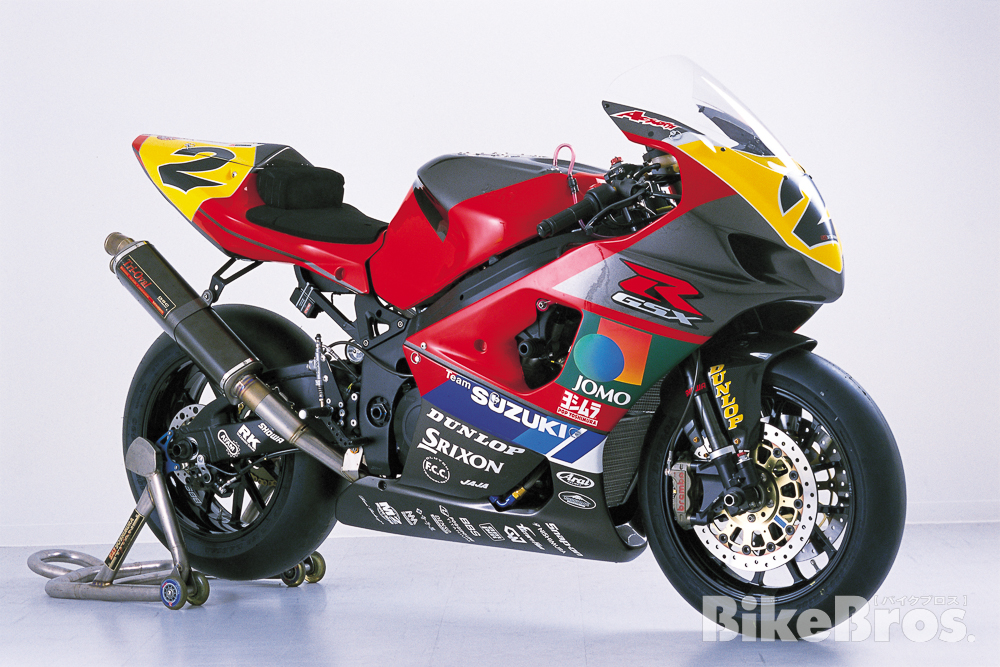
The 2004 All-Japan JSB1000-spec Yoshimura Suzuki GSX-R1000 ridden by Atsushi Watanabe. JSB1000 regulations were revised in 2004, allowing for unrestricted modifications to the velocity stacks and cam profiles. The muffler is a Tri-Oval titanium, and starting this year, a 4-2-1 exhaust system was adopted. The tires are 16.5 inches front and rear. Photo courtesy of Yoshimura Archives.
Yoshimura History #34: The Dawn of the Liter Superbike Era
2001-2004: The GSX-R1000 Arrives.
In 1999 and 2000, Yoshimura competed in the All-Japan Road Race Championship and the Suzuka 8 Hours not with a 750cc four-cylinder superbike, but with the X-1R, a Hayabusa-based X-Formula racer. That challenge generated a much greater response from racing fans than anyone had anticipated. In 2001, Yoshimura continued to compete in the X-Formula series, this time with the all-new Suzuki GSX-R1000, which had just been launched that year. The GSX-R1000 was a highly anticipated machine developed as a race-ready platform in anticipation of the rule change in the Superbike World Championship and AMA Superbike series starting in 2003, which would allow 4-cylinder 1000cc engines (previously, the limit had been 750cc for 4-cylinders and 1000cc for twins).
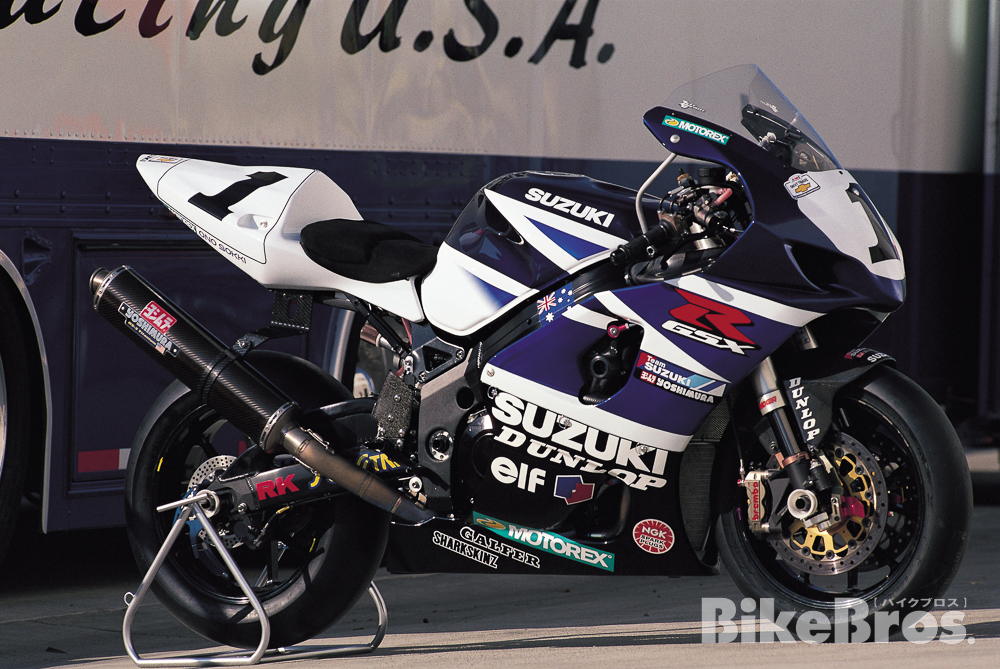
The 2004 AMA Superbike Championship-winning Suzuki GSX-R1000, ridden by Mat Mladin. Yoshimura R&D of America (US Yoshimura) builds its bikes primarily based on Suzuki’s factory machines, tailoring the engine and other components to their own specifications. Since their approach to bike building differs from that of Yoshimura Japan, there are various differences even between Superbike-spec GSX-R1000s. While both Yoshimura R&D and Yoshimura Japan use SHOWA forks, Yoshimura R&D’s are φ47mm, compared to Yoshimura Japan’s φ45mm. Also note the Yoshimura R&D RS-3 titanium exhaust system. Photo courtesy of Tomoya Ishibashi.
The X-Formula series, which has no modification restrictions, races alongside Superbikes, and both NK1 and X-Formula bikes are awarded championship points as part of the S-NK (Super Naked) class. As a result, Yoshimura’s Osamu Deguchi finished 3rd in the S-NK class standings at the 2001 All-Japan Championship. In that year’s Suzuka 8 Hours, Team Yoshimura fielded a lineup of Deguchi, Shawn Giles and Hiroaki Kawase. They started from the 12th grid position but crashed out after just two laps.
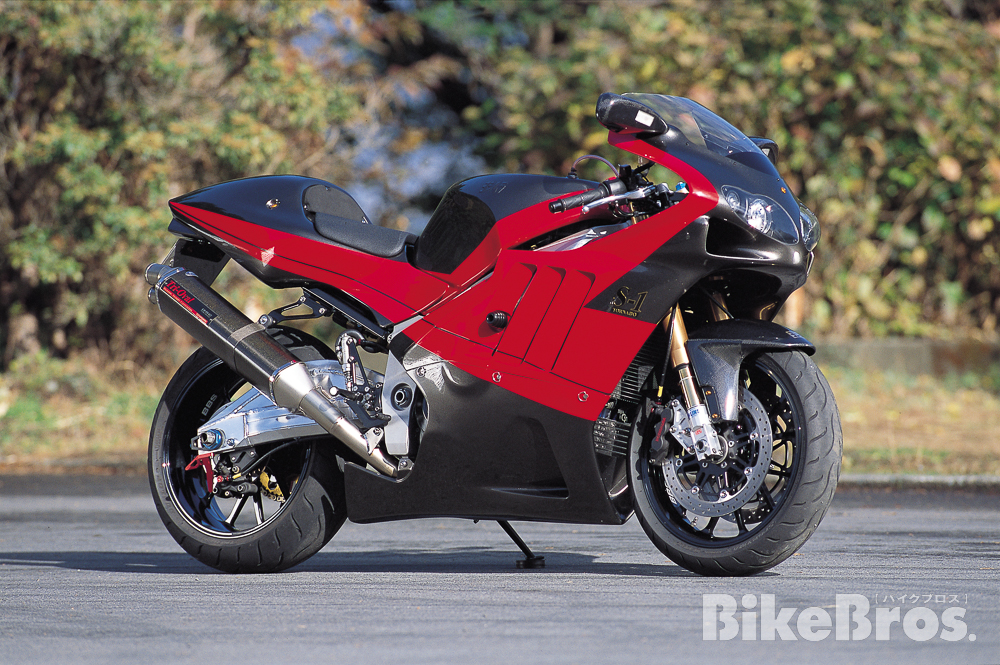
The Yoshimura Tornado S-1 delivers a maximum power exceeding 170ps (125kW) at 12,000rpm and maximum torque surpassing 11kgf-m (107.9N·m) at 10,000rpm. Compared to the stock GSX-R1000, power is increased by more than 10ps, while the curb weight is reduced by 10kg (from the original curb weight of 170kg). Although the difference may not seem significant, the overall balance is exceptional, making it a completely different beast –––– the ultimate road-going racer. Photo courtesy of Yoshimura Archives.
In January 2002, Yoshimura launched the TORNADO S-1, a turnkey street bike. Based on the GSX-R1000, it was tuned to be as close as possible to the X-Formula racer and featured a specially designed fairing. Yoshimura’s complete bikes –––– turnkey models –––– to date include the TORNADO 1200 Bonneville of 1987 (based on the oil-cooled GSX-R1100, limited to 3 units), the HAYABUSA X-1 of 2000 (based on the GSX1300R Hayabusa, limited to 100 units, priced at 2.56 million yen), and the KATANA 1135R of 2001 (limited to 5 units, 3.58 million yen); the S-1 (limited to 50 units, 3.78 million yen) marked the 4th model in the series. The limited production of complete bikes continued with the M450R in 2003 (13 units built to order, priced between 1.198 million and 1.988 million yen) and the TORNADO III ZERO-50 in 2004 (limited to 5 units, priced at 8 million yen).
In 2002, the top class of the All-Japan Championship saw the addition of a new PT (Prototype) category, which allowed MotoGP machines –––– such as the Suzuki GSV-R and Kawasaki ZX-RR –––– to compete alongside SB (Superbike) and S-NK entrants. However, the PT was treated as non-championship (non-points); for example, if a PT rider finished 1st and 2nd overall and an SB rider finished 3rd, the SB rider in 3rd place would be awarded the points for 1st place in the All-Japan standings.
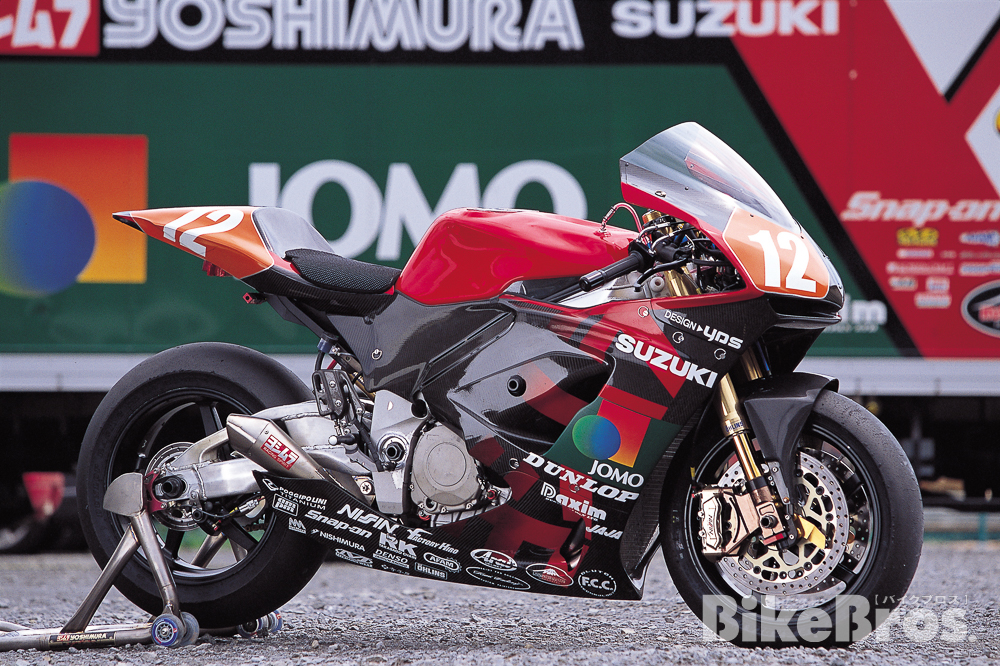
The Yoshimura TORNADO S-1R, set up for the 2002 Suzuka 8 Hours Prototype Class. After testing various exhaust systems, including the Tri-Oval, the team opted for the Short Tri-Cone based on positive feedback from the riders. Photo courtesy of Yoshimura Archives.
For the 2002 All-Japan Championship, the team signed Tamaki Serizawa, who had been a Yoshimura rider from 1995 to 1997. Serizawa posted strong results in the overall standings: 4th, 7th, 8th, 7th, 5th, 4th, 5th, DNF, and 4th. Competing against MotoGP machines and full-factory Superbikes, the team put up a good fight as an independent constructor. In the SB class, the title went to Atsushi Watanabe of Suzuki Factory, riding a GSX-R750, while the JSB1000 / S-NK title was won by Tatsuya Yamaguchi, who competed in the JSB1000 class on a Honda CBR954RR. At the 2002 Suzuka 8 Hours, Yoshimura entered the PT class with the rider pairing of Serizawa and Shinya Takeishi; they started from the 9th grid position but retired on Lap 146.
In the 2003 All-Japan Championship, the JSB1000 class (also known as Japanese Superbike, featuring 4-cylinder bikes of 600-1000cc, 3-cylinder bikes of 750-1000cc, and 2-cylinder bikes of 850-1200cc) took the center stage, with S-NK and the previously existing SB classes racing together (the S-NK and SB classes were discontinued at the end of 2002). The JSB1000 regulations were largely identical to those of new international Superbike series such as SBK and AMA. Yoshimura entered the JSB1000 in the All-Japan Championship with the GSX-1000 K3, appointing Watanabe –––– who had won the SB championship the previous year –––– as their regular rider.ges.
The result was 2nd place in the overall JSB1000 class standings. The champion was Keiichi Kitagawa (Kenz JTrust Suzuki) on a GSX-R1000, who had been Watanabe’s senior teammate during his time at Suzuki Factory.
At the 2003 Suzuka 8 Hours, Yoshimura entered the JSB1000 class with the rider pairing of Watanabe and Yukio Kagayama. However, on the 2nd lap after the start, a multi-bike crash caused by oil spilled on the track occurred at Turn 1, and their bike was caught up in it, forcing them to retire after just one lap.
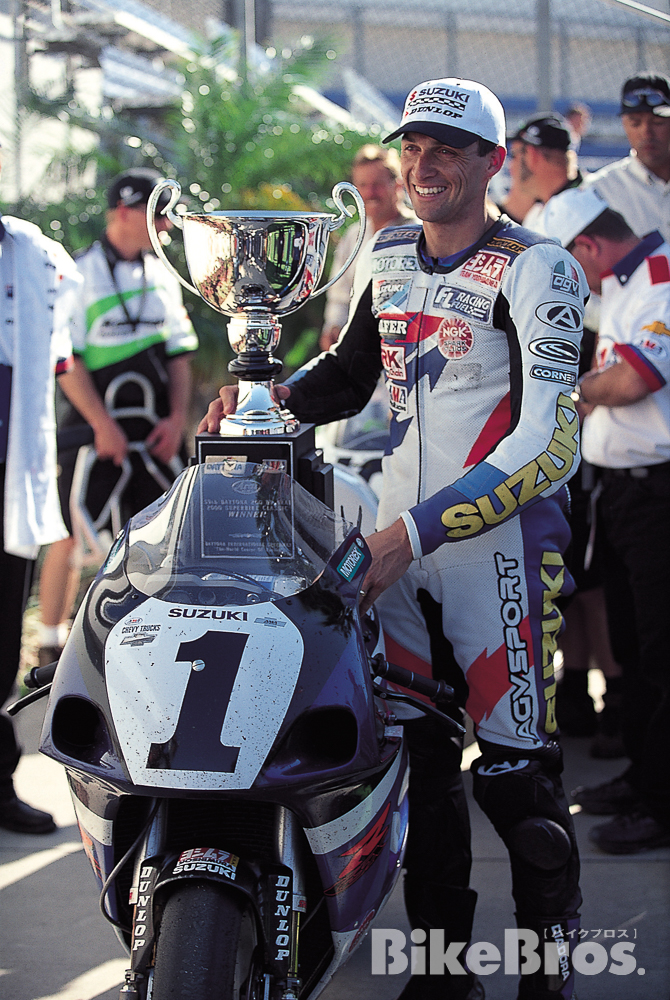
Mat Mladin and his GSX-R750, with which he claimed his first Daytona 200 victory in the 2000 racing season. This was Yoshimura Suzuki’s first victory at the Daytona 200-Mile Race in 12 years, since Kevin Schwantz’s win in 1988. Australian-born Mladin competed in the GP500 class on a Cagiva in 1993, then signed with Yoshimura Suzuki in 1996 to race in the AMA Superbike Series, where he finished 4th overall. In 1997, he finished 3rd with Fast By Ferracci Ducati, and in 1998, he returned to Yoshimura Suzuki to finish 3rd. From then until his retirement, he won the AMA Superbike Championship a record seven times with Yoshimura Suzuki: from 1999 to 2001, from 2003 to 2005, and in 2009. Photo courtesy of Tomoya Ishibashi.
Meanwhile in AMA racing, the Yoshimura Suzuki GSX-R750 continued to excel: following Tom Kipp’s 1994 and Aaron Yates’s 1996 750 Supersport championships, Mat Mladin won the Superbike championship in 1999. This was a remarkable achievement for both Yoshimura and Suzuki, their first since Jamie James’s victory in 1989.
In the 2000 season, Mladin rode the Yoshimura Suzuki GSX-R750 to his first victory at the Daytona 200. His margin of victory over Nicky Hayden, who finished 2nd on an American Honda RC51, was a mere 0.011 seconds. Mladin also won the AMA Superbike Championship for two consecutive years. In the 750 Supersport series, the then-17-year-old John Hopkins took the title riding a Valvoline EMGO Suzuki GSX-R750W/Y.
In 2001, the EFI-equipped GSX-R750 dominated the AMA roadracing scene; Mladin won his second consecutive Daytona 200 title and secured his third straight AMA Superbike championship with Yoshimura Suzuki. Jimmy Moore of the Corona Extra / EBSCO Suzuki team won the title in the 750 Supersport, and Hopkins won the title in Formula Xtreme. Hopkins later signed with the Suzuki factory racing team, going on to compete as a MotoGP rider.
In 2002, Aaron Yates finished 5th in the AMA Superbike standings, and Mladin finished 7th. Meanwhile, Moore won the 750 Supersport title, Yates won the 600 Supersport title on a GSX-R600, and Jason Pridmore won the Formula Xtreme title on a GSX-R1000.
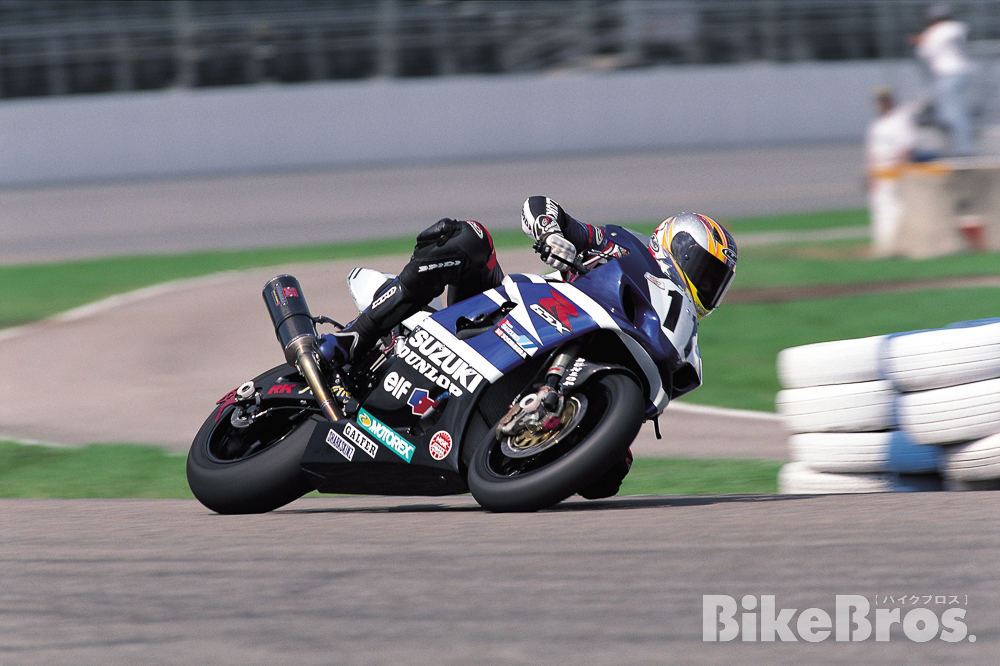
Ben Spies made his AMA Pro Racing debut in 2000 with the satellite team Valvoline EMGO Suzuki, and joined Yoshimura Suzuki in 2003. He drew attention from the start for his distinctive riding style, with his elbows held out wide, which later earned him the nickname “Elbows.” From 2010 to 2013, he competed full-time in MotoGP. Photo courtesy of Tomoya Ishibashi.
In 2003, the AMA Superbike series began allowing 1000cc 4-cylinder bikes to compete, leading to the debut of the superbike-spec GSX-R1000. In the series, the Yoshimura Suzuki GSX-R1000 demonstrated overwhelming speed, with Mladin claiming his fourth championship –––– his first in two years –––– while Yates finished 2nd and Ben Spies 4th in the standings. In Formula Xtreme, Spies won the championship on the GSX-R1000, and in Superstock (the new class replacing 750 Supersport), Josh Hayes took the title on the GSX-750.
FThe 2004 domestic racing results for Yoshimura Suzuki saw Watanabe, riding a GSX-R1000, finish 7th in the JSB1000 class of the All-Japan Championship. At the Suzuka 8 Hours, the team fielded a FIM Superbike-spec GSX-R1000 ridden by the duo of Watanabe and Kagayama, who started from the 4th grid position. Amid a turbulent race marked by crashes and safety car interventions, they secured an impressive 2nd-place finish. For Yoshimura, this podium finish at the Suzuka 8 Hours was their first in 16 years, since Kevin Schwantz and Doug Polen took 2nd place in 1988.
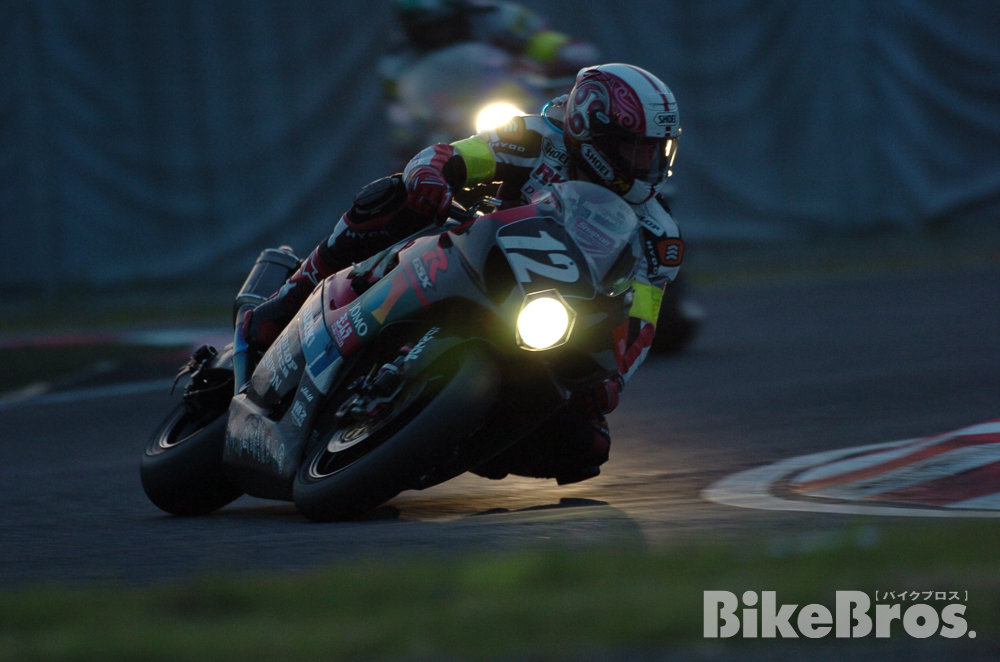
As the sun set over the 2004 Suzuka 8 Hours, Yukio Kagayama races through the chicane toward the checkered flag. That night, Yoshimura returned to the Suzuka 8 Hours podium (2nd place) for the first time in 16 years and was greeted by a storm of cheers from the fans. Yoshimura truly is a worthy protagonist of the Suzuka 8 Hours. Photo courtesy of Yoshimura Archives.
Meanwhile, in the 2004 AMA Superbike Championship, Mladin won the Daytona 200 and claimed the series title.
That year, 2004, Yoshimura celebrated its 50th anniversary. “I’ve Got the Power!” –––– The passionate history of 4-stroke tuning began in 1954 with Pop Yoshimura, who started a small business called Yoshimura Motors in Zasshonokuma, Fukuoka, borrowing a corner of his older brother’s metalworking shop. Since then, the company has grown significantly to become one of the world’s leading tuning brands, with operations in Japan (Yoshimura Japan) and the United States (Yoshimura R&D of America). Although they now precision-machine parts using CNC lathes and design cams with computers, they will never forget the days of making mufflers by stuffing sand into pipes, heating them with a torch, and bending them by hand, or clamping valves into a drill press and polishing them by hand. They believe that each of these individual steps represents the origin of tuning, and that this passion is the power that transcends existing theories.
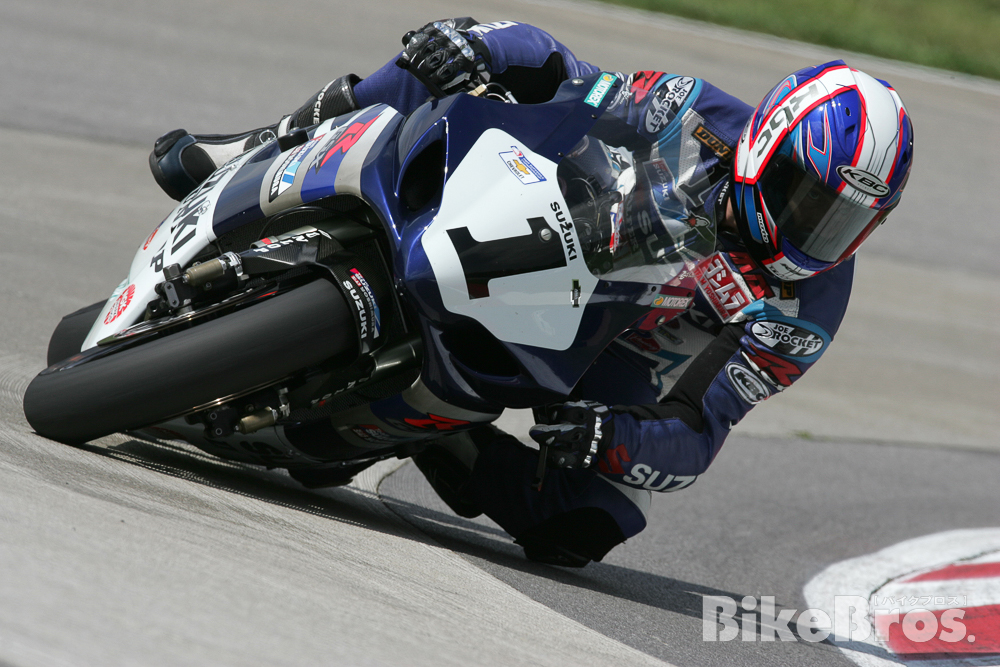
Mat Mladin racing through 2004. From the GSX-R1000’s debut in 2003 until his retirement at the end of 2009, he completely dominated the AMA Superbike series alongside his Yoshimura Suzuki teammate Ben Spies. Photo courtesy of Yoshimura Archives.
EPILOGUE
The Yoshimura Suzuki GSX-R1000 continued to succeed in AMA Superbike thereafter, winning the championship for Mladin in 2005 and 2009, bringing his total to a record-breaking seven titles, and also securing titles for Spies in 2006 and 2007 (a double title with the AMA 1000cc Superstock class) and 2008, securing three consecutive AMA Superbike championships, and once more in 2017, bringing the title to Toni Elías.
At the Suzuka 8 Hours, Yoshimura won in 2007 (Yukio Kagayama / Kosuke Akiyoshi) and 2009 (Daisaku Sakai / Kazuki Tokudome / Nobuatsu Aoki). The 2007 victory was their fourth title and their first in 27 years, since 1980.
In the EWC (FIM Endurance World Championship), Yoshimura has been supplying engines and other components to SERT (Suzuki Endurance Racing Team) since 1980, and even after the transition to the Yoshimura SERT –––– a setup in which Yoshimura builds Suzuki’s factory machines from scratch –––– the team went on to win the world championship in 2020 and 2024.
THE LEGEND CONTINUES….
English version translated & edited by Samuel Paul Kawashima.
Stories and photos supplied by Yoshimura Japan / Tomoya Ishibashi
Written by Tomoya Ishibashi
Edited by Bike Bros Magazines Published on April 17, 2026
[ Japanese Page ]